There's a moment in every Road Runner cartoon when Wile E. Coyote sprints off the edge of a cliff and keeps running. He's suspended in midair, legs churning, absolutely confident in his forward momentum—until he looks down. Then physics remembers him, and gravity does its work.
The global software industry is currently sprinting off that cliff.

"Why pay for SaaS ever again? Be a DIY degen who inferences claude for software."
Sent to me via Joi Ito
The Phase Transition
We are witnessing something genuinely unprecedented, at least in my professional experience: the emergence of what I call the Road Runner Economy—a phase transition in which the vast majority of commercial software becomes instantly replicable by any competent team with access to frontier AI models. The metaphor is precise: these companies are still running, still raising rounds, still hitting quarterly targets. They just haven't looked down yet.
Three months ago, almost nobody believed this. Jesse Vincent—creator of Obra and Superpowers (yes, that Superpowers, not the scammy shitcoin ones)—put it plainly: "I feel like 3 months ago, when we were saying this, almost nobody believed it." The skepticism was understandable. We've heard "this changes everything" so many times that the phrase has lost all meaning. But Jesse added something else that's stuck with me:
That slope changed over Christmas.

The Perfect Storm
Something happened during the holiday break. A perfect storm of perfect storms.
For me, it was having extra time to dig into experiments I hadn't had time for over the previous months, right at the moment others like me were doing exactly the same thing. It was having friends like Harper Reed and a growing network of curious builders, so the holiday catchups and random "what have you been up tos" all pointed the same direction. Perhaps most potently, as Ramon (@NilsEdison) observed, there was a particular flavor of New Year's resolution energy that gave everything a "next year I want to do things differently," kind of vibe.
Not to mention Claude Code itself—wow. And the community forming around it—wow. And the speed of the experiments—WOWOWOWOW.
No joking, it's all been a flywheel. Since New Years, when I seriously started messing around with Claude Code, I've built:
- Super Xtreme Mapper, a high-end, professional MIDI mapping software for professional DJs
- CrateBot, an audio fingerprinting suite for DJing that uses 135 dimensional machine learning models to analyze your music library and intelligently tag your tracks (DJ'ing is a main side quest for me)
- Boswell, a real-time voice agent that can conduct in-depth interviews with anyone on any topic over zoom and instantly write it up
- The Narrative Engine, a multi-agent panel of writing, presentation, advertising, and audience experts which takes any presentation, prose or writing and helps critique, improve and rework it
- A "Noah Writing" bot which read every book, blog post, essay, interview and public talk I've done and writes in my tone of voice
- Contributed to the Scenario Engine, which produces professional grade scenario plans and foresight reports in less than an hour (what used to take a week)
- Contributed to a Keynote slide automator, using the Narrative Engine
- GhostRidetheWhip, a literary editor and ghost writing assistant to help me finish a book I've been working on
- Make It So Camp, a two-week intensive teaching knowledge workers to become "captains" of AI through articulation, not programming
- And a half dozen other ideas in progress
And I've basically never written a line of code in my life.
December 2025 was a watershed and I think we'll look back at the beginning of 2026 and recognize that is when things began to change for a lot of us.

What Are We Actually Paying For?
Consider what these SaaS businesses actually sell. Salesforce sells a database with forms and workflows on top. Notion sells a document editor with a database underneath. Zapier sells if-then logic connecting APIs. Stripe sells a wrapper around bank rails with fraud detection. ServiceNow sells ticketing. Zendesk sells ticketing with a chat widget. Monday.com sells ticketing with pretty colors.
I don't mean to be dismissive—these companies employ brilliant engineers and have solved genuinely hard problems over decades. There's also a lot more to creating and running a successful company than just a product alone. But the essential functionality of most enterprise software can now be described in a few paragraphs and implemented in a few hours by an AI coding agent.
I Just One-Shat Your Company
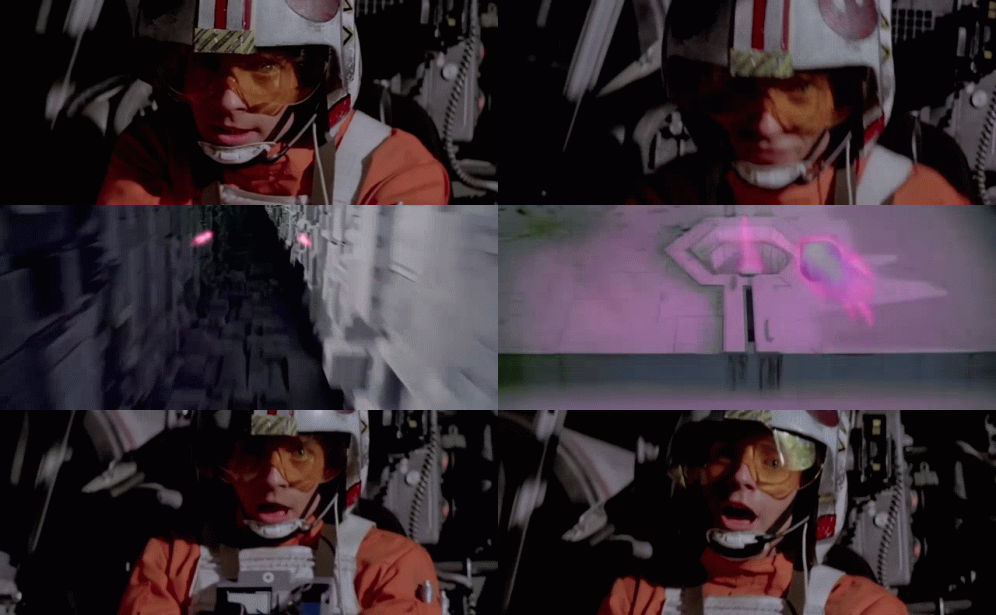
The new workplace idiom writes itself. "This meeting could have been a prompt." Or more brutally: "I just one-shat your company."
Both phrases are already circulating. Both capture something true. The first recognizes that vast swathes of corporate process—the meetings, the requirements gathering, the sprint planning, the integration discussions—collapse into a single well-crafted prompt. The second acknowledges that years of accumulated engineering effort can now be replicated in a single session. One shat. Done.
Speaking of which, I hereby coin the phrase “One shat”; past tense for one-shotting a product, service or company in a casual, off-handed, but devastatingly effective way.

The Math Is Brutal
The economics are almost comically one-sided.
ACME Price Comparison Calculator™
Salesforce Enterprise: $150-300 per user/month
AI-Generated Custom CRM: $50-100 total/month
Not per user. Total.
Multiply that arbitrage across every software category and you begin to understand the scale of value about to be unlocked, or destroyed, depending on where you sit.
But the price differential, dramatic as it is, understates the real transformation. What's changing isn't just cost—it's the nature of what software can be.
Enterprise software has always been a compromise. You buy Salesforce not because it perfectly fits your business, but because building something custom was prohibitively expensive. You adapt your processes to the tool. The median enterprise runs 130+ SaaS applications, each solving a slice of their needs, none solving them well.
Now imagine the inverse: software that adapts perfectly to your business. Not configured—generated. The platonic ideal of software, instantiated.
This, but for AI
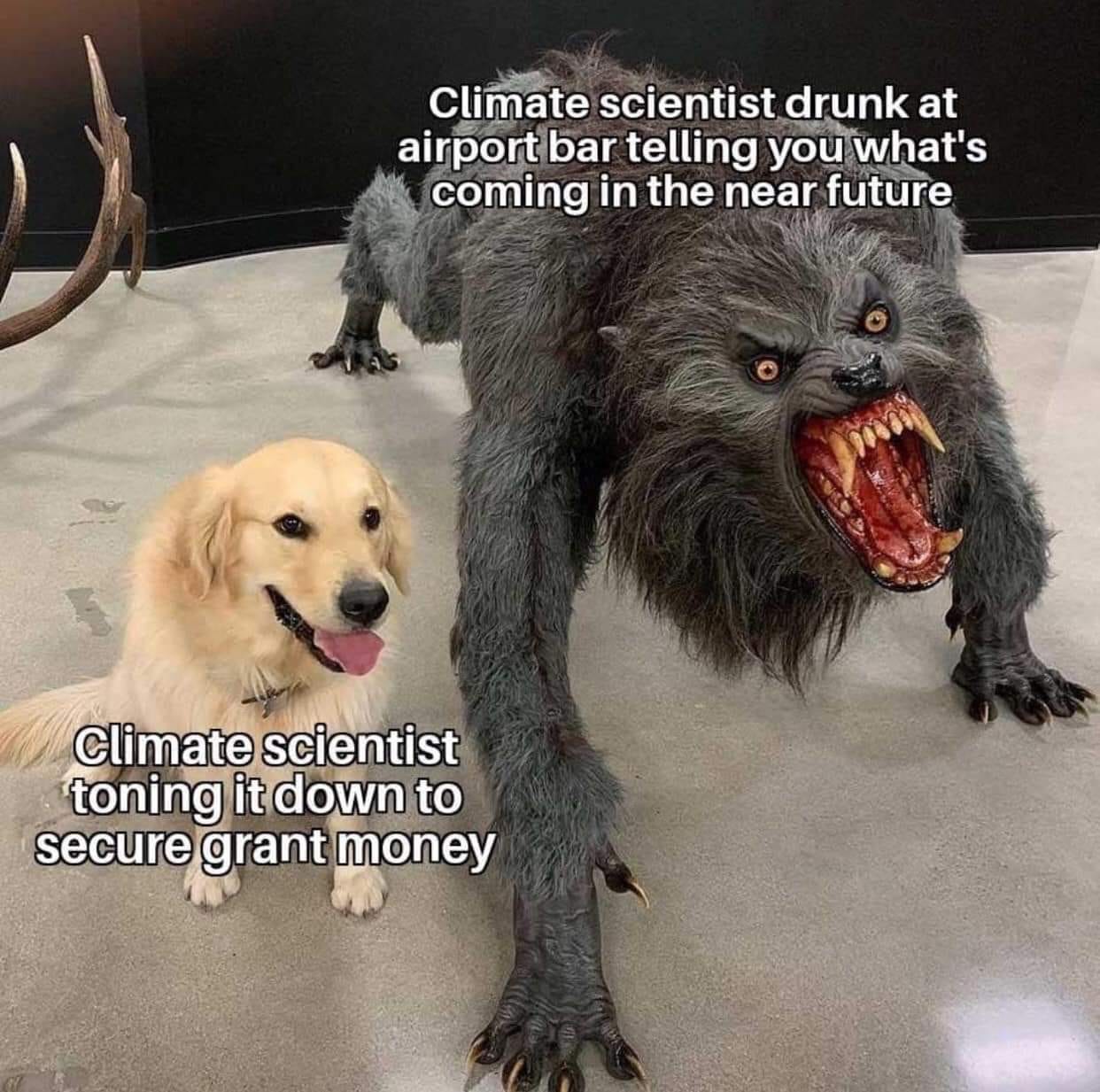
The Airport Bar Test
Now comes the part where I'm supposed to offer reassurance. "But humans will still be needed for strategy!" "Creative work can't be automated!" "There will be new jobs we can't yet imagine!"
Maybe. But I've been in enough airport bars with enough honest technologists to know what they say when the tape recorder is off. The same people who publicly proclaim that AI is "just a tool" privately wonder if they're witnessing the beginning of a phase transition in human economic organization itself.
The honest answer is: we don't know. The landscape of the 21st-century economy is already largely defined, and it doesn't look like anything we've seen before. We are not simply optimizing the 20th century; we are entering genuinely novel territory, and our maps are blank.

The Flywheel
What strikes me most about this moment is how it emerged. Not from a single breakthrough announcement or a dramatic product launch, but from a collective realization that spread through networks of curious people over a holiday break. The flywheel effect was real: each person's experiments emboldened others, each shared discovery accelerated the next. A community of practice coalesced in weeks that might have taken years in a previous era.
This is how phase transitions actually happen. Not with a bang, but with a cascade of individual "holy shit" moments that reach critical mass. We're still in the slowly part of slowly and then all at once. But the slope of the line is changing. You can feel it in the conversations that have shifted, in the questions people are now asking, in the memes that no longer need explanation.

The Next 24 Months
The next two years will see a cascade of custom software replace commercial software at a pace that will surprise even those of us who have been anticipating it. The Road Runner economy isn't coming. It's here. The cliff edge has already been crossed.
The SaaS tombstone meme is funny because it's true, and terrifying for the same reason. These companies haven't looked down yet. When they do—when the quarterly reports stop making sense, when the churn metrics spike, when the enterprise customers quietly cancel their contracts and replace them with AI-generated alternatives—the fall will be swift.
It won't happen overnight. Enterprise contracts last for years. Some take years to even agree on. Procurement systems are slow, big clients are risk averse, and some major SaaS companies have substantial cash (or VC) war chests to keep them going. Some might even get bailed out by government contracts. But it's coming. It's coming for sure.
What emerges on the other side? A world where you say "segment my customers by chicken wing sauce preference and cross-sell them custom BBQ bibs"—and it happens. For free.
That example is stupid but that's the point. Foundation models are suddenly able to do just about anything you ask them to do. It's not AGI, but it doesn't need to be. Maybe "GAI" is more appropriate—Generic Artificial Intelligence. As long as the servers stay on and the models keep improving, we're entering a world of instant, on-demand, bespoke software. Infinitely customizable, radically cheaper, fundamentally different. A world where "off-the-shelf" is an insult and "made for you" is the baseline expectation. A world where a meeting really could have been a prompt, and where one-shatting a company is no longer a punchline but a business plan.
One thing is for sure: I just bought my 17 year old a Claude Pro Max subscription and am trying to convince my 15 year old to try it too. Why? Because it's almost as if their degree doesn't matter anymore. What matters is learning these tools as quickly as possible—because now, almost anything is possible. That wasn't true last quarter. It'll be even more true next quarter, and every quarter after that, until something fundamental breaks and we all wake up in a new world.
Whether that world is better depends entirely on who's building it, and for whom.
